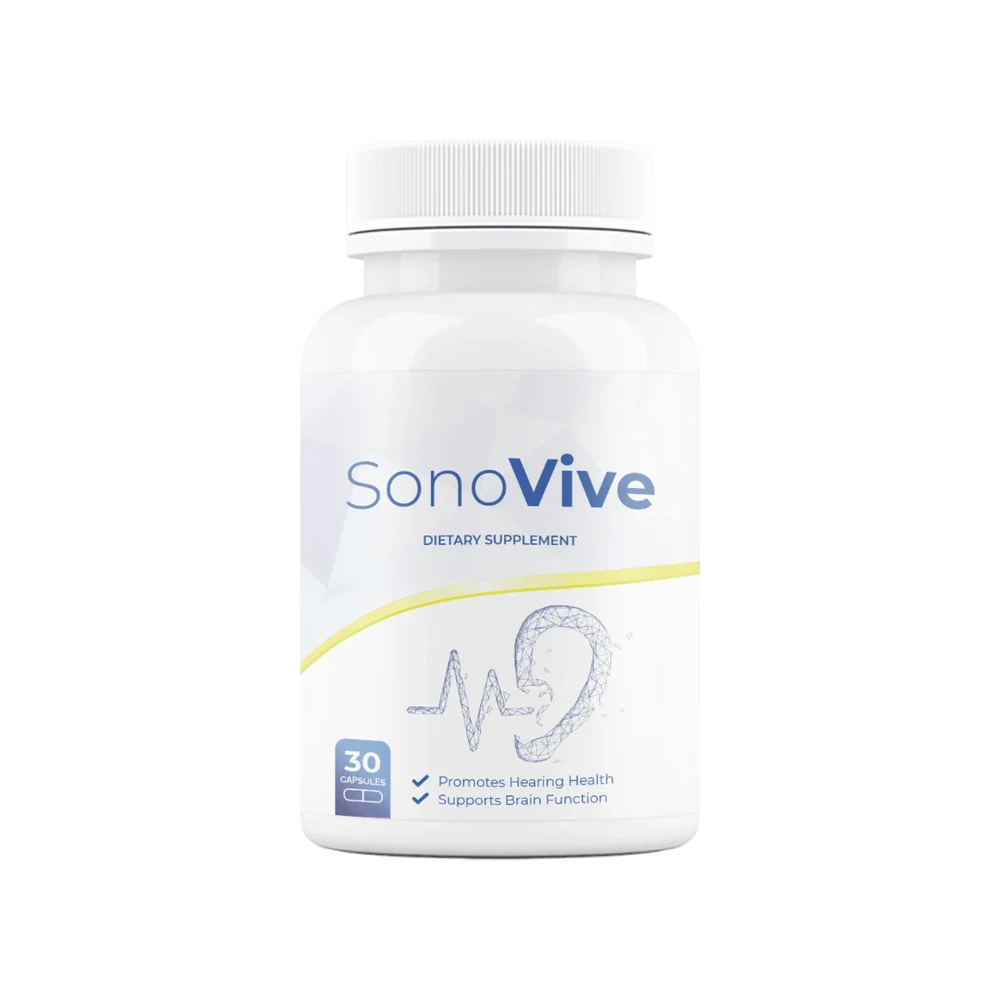
A once-daily capsule built on ginkgo biloba, bacopa monnieri and vinpocetine — aimed at the brain side of hearing rather than the ear itself. Here is what that means, what the evidence supports, and two drug interactions in this formula that genuinely matter before you order.
Check Today’s Price See Packages

Produced in a GMP-certified US facility.
Taken with food. 30 servings per bottle. No stimulants.
Listed individually rather than hidden in an unnamed blend.
One-time payment. No subscription, nothing to cancel.
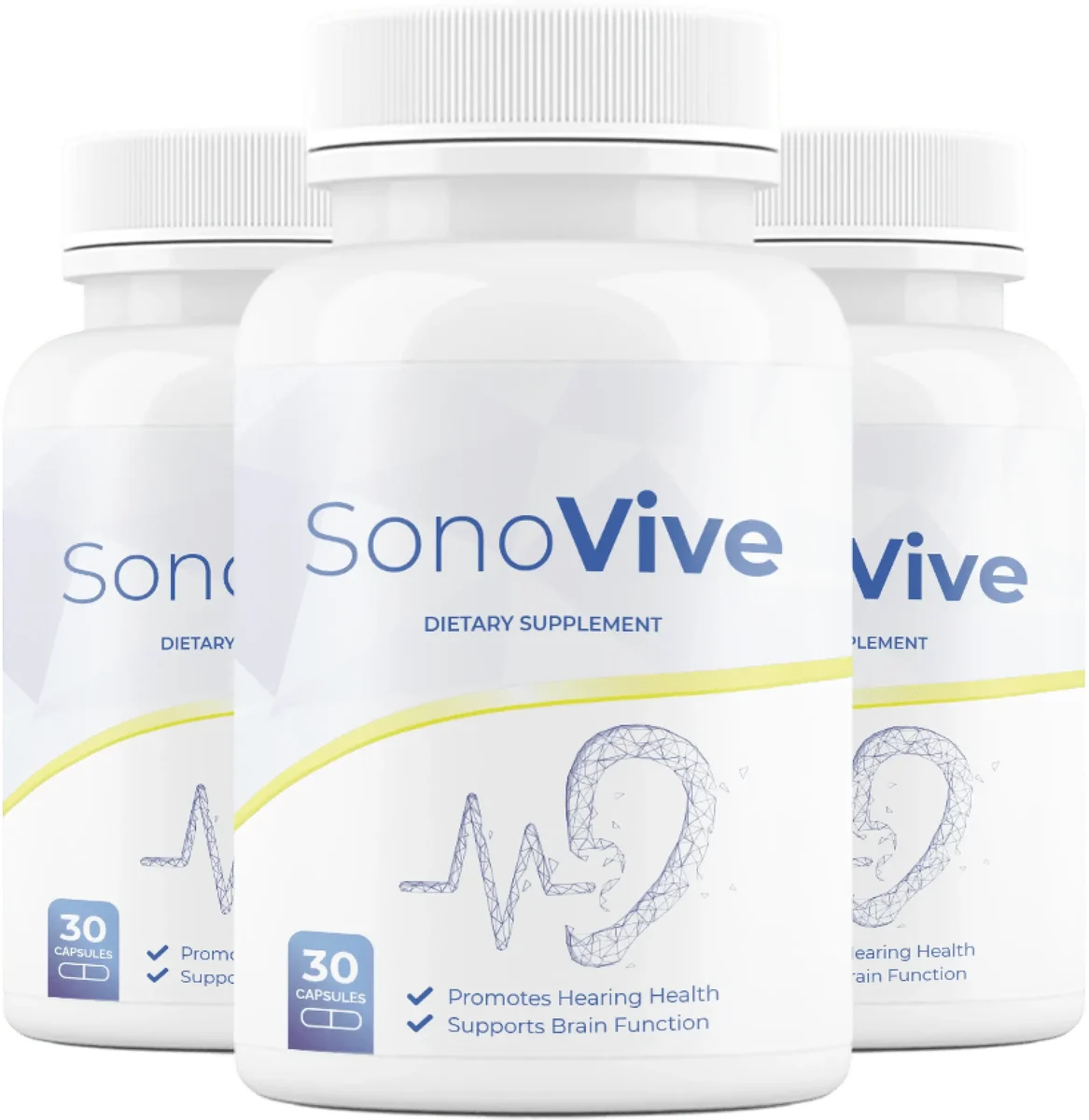
SonoVive is a once-daily hearing support capsule created by Sam Olsen, described as a medical chemist. It combines ginkgo biloba, bacopa monnieri, St John's wort, vinpocetine, huperzine-A and a phosphatidylserine complex, taken as one capsule with food.
The premise is more interesting than most in this category, and worth understanding properly. Hearing is not purely mechanical — sound is converted to nerve signals in the cochlea, then interpreted by the brain. The formula targets that second half: blood flow to the auditory system and the cognitive processing of what arrives. That is why the ingredient list reads like a nootropic rather than an ear formula.
It is a coherent rationale. It also means the product cannot help with the mechanical causes of hearing loss, and there are two ingredients here that require a conversation with your pharmacist first.
| Product type | Hearing & cognitive support supplement (capsules) |
| Created by | Sam Olsen, medical chemist |
| How to take | One capsule daily with food |
| Servings | 30 per bottle — one month |
| Key ingredients | Ginkgo biloba, bacopa monnieri, St John's wort, vinpocetine, huperzine-A |
| Targets | Auditory processing and circulation — not the ear mechanism |
| Major interaction | St John's wort — check every medicine you take |
| Pregnancy | Contains vinpocetine — not for women who may become pregnant |
| Guarantee | 60-day money-back |
Sold through the official website. Every package is a one-time payment — no subscription and nothing to cancel. Multi-bottle bundles lower the per-bottle price and include free US shipping.

Prices shown were current when this page was last reviewed and are set by the seller. Confirm the package, total, shipping and refund terms on the order page before paying.
The formula works on the brain side of hearing rather than the ear itself — which is both its most interesting idea and its clearest limitation.
The cochlea is supplied by a single, tiny end-artery with no backup circulation — which genuinely does make it vulnerable to reduced blood flow. Ginkgo and vinpocetine both have circulatory research behind them.
Bacopa, huperzine-A and phosphatidylserine act on acetylcholine and memory consolidation. Following a conversation in a noisy room is as much a processing task as a hearing one.
Oxidative stress is implicated in age-related and noise-related hearing decline. The botanical antioxidants here address that, though no supplement reverses damage already done.
Each ingredient with what it contributes, and where the genuine cautions lie.
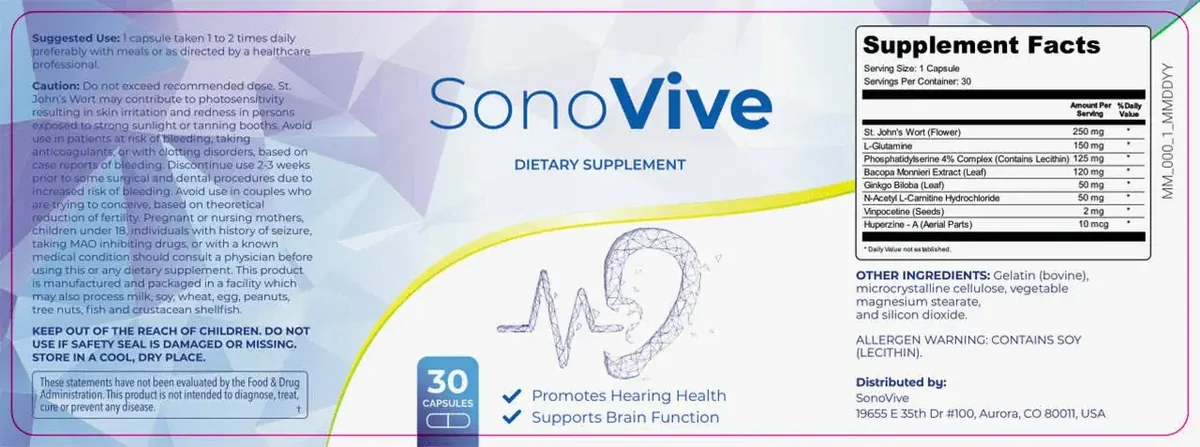
The best-supported ingredient here. Ginkgo has genuine research on microvascular circulation, and the cochlea's single end-artery blood supply makes the rationale coherent. Check the standardisation — clinical work uses extract standardised to 24% flavone glycosides, and that percentage is not consistently disclosed.
Real randomised evidence for memory acquisition, but only after 8 to 12 weeks of daily use. If you expect anything from this ingredient, expect it slowly — that is how it behaved in every trial.
Included for mood and nerve-calming effects, with some rationale for tinnitus distress. But it induces CYP3A4 and P-glycoprotein, reducing the effectiveness of oral contraceptives, warfarin, antiretrovirals, immunosuppressants, statins and more — and risks serotonin syndrome with antidepressants. Anyone on regular medication must check with a pharmacist first.
A synthesised derivative of periwinkle, studied for cerebral blood flow. In 2019 the FDA advised that women who are pregnant or could become pregnant should not consume it, citing possible fetal harm. Several countries do not permit it as a supplement ingredient.
A moss-derived acetylcholinesterase inhibitor — it slows the breakdown of acetylcholine, the neurotransmitter behind memory and attention. It is pharmacologically active, which is worth respecting rather than treating as a gentle herb. Cycling rather than continuous use is commonly advised.
Read this figure carefully. Where a label states 125 mg of phosphatidylserine 4% complex, that refers to the complex — the pure phosphatidylserine content is a small fraction of it. Research on phosphatidylserine uses 100–300 mg of the actual compound, which is a very different quantity.
Each is a possibility rather than a promise, and none has been demonstrated with the finished product. Restoring hearing, repairing hair cells and replacing a hearing aid are deliberately not on this list — no supplement does any of those.
Ginkgo's best-evidenced property, and the cochlea's single end-artery supply makes it a coherent target.
Following speech in a noisy room is a brain task as much as an ear one — that is what this formula targets.
Bacopa, huperzine-A and phosphatidylserine all act on the acetylcholine pathway.
Oxidative stress is implicated in age-related and noise-related hearing decline.
Tinnitus distress is strongly tied to mood and attention, which is the rationale for the St John's wort.
Taken with food. Nothing to time, no caffeine, no stack to manage.
Reported experiences centre on clarity in conversation rather than volume, appearing gradually over two to three months. The recurring practical theme in feedback is checking medications first — which is exactly right for this formula.
“My pharmacist stopped me before I started — I am on warfarin and she said the St John's wort would interfere with it. I had no idea a hearing supplement could do that. I did not take it in the end, but I am glad I asked rather than assumed. Check your medicines.”
Barbara M., 67 — Washington
“Audiologist first, which I would recommend. She said I had age-related loss in the high frequencies and a hearing aid would help most, but the supplement would not hurt. Three months in, conversations in the pub are a little easier to follow. The aid did more. Both together is where I ended up.”
Frank T., 71 — Florida
“Bought it for the ringing. Some improvement in how much it bothers me, though I am not sure the ringing itself is quieter — more that I notice it less. Four stars. I would have liked the ginkgo standardisation printed on the label so I could compare the dose against the research.”
Janet R., 58 — Ohio
Testimonials are illustrative and not typical. Individual results vary, and no outcome is guaranteed.
Multi-bottle bundles bring the per-bottle price down, with free US shipping and 60 days to change your mind.
One-time payment · No subscription · 60-day money-back guarantee
Sixty days from purchase. That is a workable window here, though worth setting against the timeline: bacopa needs 8 to 12 weeks to show anything, so two months gets you to the edge of a fair trial rather than comfortably past it.
Keep your order confirmation email for the order number and note the deadline in your calendar rather than relying on memory. Start any return with time to spare — deadlines are measured at the seller's end.
Not optional with this formula. St John's wort interacts with a long list of common medicines, including the contraceptive pill. This is the single most important step here.
An audiogram tells you what type of loss you have and whether a supplement is even plausibly relevant. Some causes are treatable; some need a hearing aid.
Where current pricing and the 60-day guarantee apply. Read the final order screen for the total and any pre-selected extras.
Bacopa's window. Track whether conversations in noisy places are easier — that is the realistic outcome, not louder sound.
Secure your SonoVive package while stocks last. Official website only, one-time payment, with free US shipping on multi-bottle bundles.

SonoVive is a once-daily hearing and cognitive support capsule created by Sam Olsen, described as a medical chemist. It combines ginkgo biloba, bacopa monnieri, St John's wort, vinpocetine, huperzine-A and a phosphatidylserine complex. One capsule daily with food, 30 servings per bottle, made in a GMP-certified US facility. It is not a drug and it is not a hearing aid.
It targets the brain side of hearing rather than the ear mechanism. Sound is converted to nerve signals in the cochlea and then interpreted by the brain — this formula addresses circulation to the auditory system and the cognitive processing of what arrives. The cochlea is supplied by a single tiny end-artery with no backup, which genuinely does make blood flow relevant.
The finished formula has not been trialled. Ginkgo has the most genuine research, though a Cochrane review of ginkgo for tinnitus found the evidence limited. Bacopa has real memory evidence over 8 to 12 weeks. Expect modestly better clarity in difficult listening situations at best — not restored hearing, which no supplement delivers.
No. The hair cells in the cochlea that convert sound into nerve signals do not regenerate in humans. Once lost to age, noise or illness, nothing brings them back. Any page claiming a supplement repairs or rebuilds them is describing something biology does not permit. What this may plausibly support is circulation, processing and antioxidant status.
Yes, and seriously. St John's wort is one of the most significant herb-drug interactions in medicine. It reduces the effectiveness of oral contraceptives — documented unintended pregnancies — along with warfarin, HIV antiretrovirals, transplant immunosuppressants, some cancer drugs, statins and digoxin. With antidepressants it risks serotonin syndrome. If you take any regular medication, speak to a pharmacist before the first capsule.
No. The formula contains vinpocetine, and in 2019 the FDA advised that women who are pregnant or who could become pregnant should not consume it, citing evidence of possible harm to a developing fetus. Vinpocetine is also not permitted as a supplement ingredient in several other countries. It is not suitable while nursing either.
Ginkgo biloba, bacopa monnieri, St John's wort, vinpocetine, huperzine-A, a phosphatidylserine complex, and supporting compounds. One point worth checking carefully: where a label states 125 mg of phosphatidylserine 4% complex, that figure refers to the complex — the actual phosphatidylserine content is a small fraction, and research uses 100–300 mg of the pure compound.
Eight to twelve weeks, driven by the bacopa, which needs that long in every trial it has appeared in. Judge it on clarity in difficult listening situations — conversations in a noisy room — rather than on volume. Volume is what a hearing aid changes; clarity is the plausible target here.
Around $69 for a single bottle, roughly $59 per bottle on the three-bottle package and about $49 per bottle on the six-bottle package. Larger bundles include free US shipping. All are one-time payments with no subscription. Prices change, so confirm at checkout.
Ginkgo has mild antiplatelet activity and can cause headache or digestive upset. St John's wort causes photosensitivity in some people. Huperzine-A is pharmacologically active and cycling rather than continuous use is commonly advised. The interactions above matter considerably more than the side effects.
No, and some pages selling it claim an ‘FDA approved facility’, which does not exist. No dietary supplement is FDA approved, and the FDA does not approve facilities — it registers them. A page using ‘approved’ in this context is misdescribing the regulations.
Immediately if your hearing drops suddenly over hours or days, usually in one ear — that may be sudden sensorineural hearing loss, which is treatable with steroids but only within a window of days. Also see a doctor for hearing loss with dizziness, ringing in one ear only, ear pain or discharge, or hearing loss after a head injury.
Real, verifiable PubMed records on the ingredients and on the safety issues flagged above.
Regular Price: $99/per bottleToday: $49/per bottle
On the 6-bottle package · Free US shipping · 60-day money-back guarantee
Get Your Discount NowOne-time payment · No subscription · 60-day money-back guarantee
The four things that decide it, side by side.
Genuinely thoughtful. Hearing is partly a brain processing task, and the cochlea's single end-artery supply makes the circulation angle coherent.
Ginkgo has the most real research here — but check the standardisation, which is not consistently disclosed.
St John's wort reduces the effectiveness of the contraceptive pill, warfarin, antiretrovirals and more. Pharmacist first, always.
Cochlear hair cells do not regenerate. Nothing here restores hearing or replaces a hearing aid.
The verdict — 4.8/5: a more thoughtfully reasoned hearing formula than most — targeting auditory processing and circulation rather than promising to rebuild the ear, which is at least biologically honest. Ginkgo carries real research and the cochlear blood supply argument is sound. But two ingredients make this a product you must clear with a pharmacist rather than simply buy: St John's wort interacts with a long list of common medicines including the contraceptive pill, and the FDA has advised that women who could become pregnant should not consume vinpocetine. If you take no medication, are not of childbearing age, have had your hearing tested, and expect better clarity rather than restored hearing, it is a reasonable trial. Otherwise, check first.